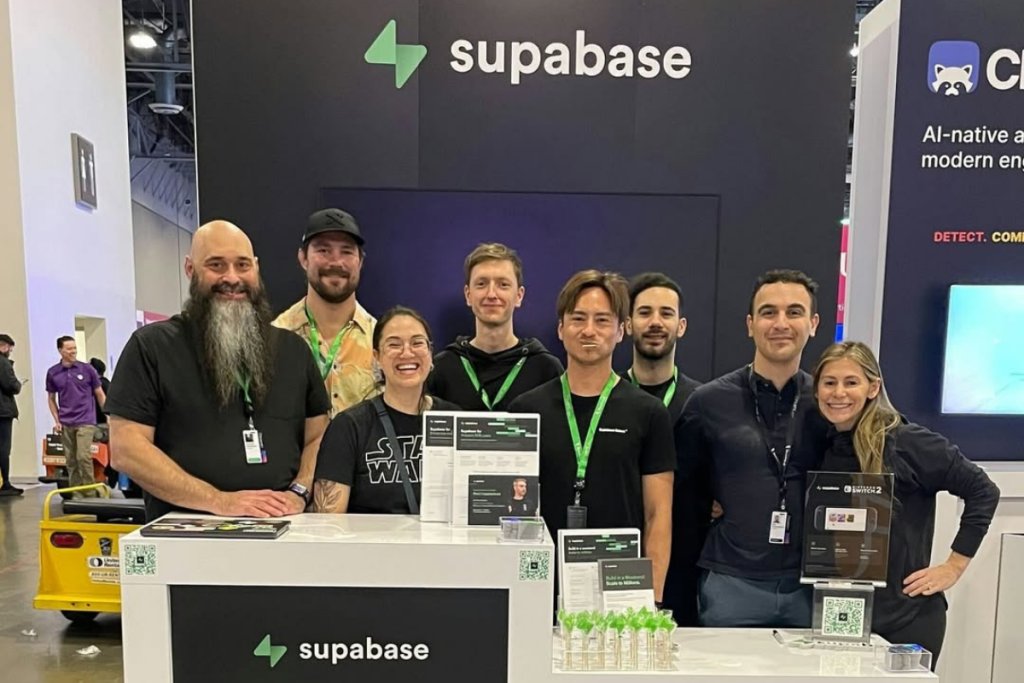
Supabase closed a $500 million Series F funding round at a $10 billion pre-money valuation this month, according to BBNTimes. The financing doubles the open-source backend company’s price tag in just eight months and places it among an elite group of developer-infrastructure decacorns at a time when venture capital is consolidating around a handful of perceived category winners.
The Singapore-based startup, which builds an open-source alternative to Google’s Firebase on top of PostgreSQL, has now reached a valuation milestone that few independent database platforms achieve outside of hyperscaler clouds. As reported by MSN, the company has greatly benefited from the proliferation of AI development tools that require robust structured data layers underneath large language model pipelines.
The Mechanics of a Decacorn Round
The $500 million infusion brings Supabase into decacorn territory less than four years after its first commercial release. While the company has not publicly disclosed the full list of participants in the Series F, the round’s size signals that existing backers likely doubled down rather than bringing in a new lead at the top of the cap table. The eight-month gap since its prior financing suggests the firm is still burning capital aggressively to capture enterprise market share before incumbents can fortify their positions.
At $10 billion, Supabase now carries a valuation multiple that demands not merely strong growth but outright market leadership. The capital will likely fund three parallel tracks: expanding its managed-cloud footprint across more regions, hiring enterprise sales and solutions engineers, and deepening its vector and real-time database offerings to serve AI-native applications. The company offers a hosted platform that wraps PostgreSQL with authentication, auto-generated APIs, edge functions, and object storage. Customers pay for database compute, egress, and support tiers. The open-source core remains free to self-host, but the hosted service carries margins typical of infrastructure-as-a-service businesses that rely on usage-based billing rather than per-seat licenses.
How Supabase Fits the Modern Stack
Supabase’s technical proposition hinges on genuine PostgreSQL compatibility. Unlike Firebase, which locks data into a proprietary document store and query model, Supabase exposes a standard Postgres instance. Developers connect existing ORMs, run raw SQL, and migrate away without rewriting schemas. The platform layers real-time subscriptions, row-level security policies, and auto-generated REST and GraphQL APIs on top of the engine.
This architecture has found particular traction among teams building AI applications. Large language model pipelines often rely on vector similarity search, and PostgreSQL’s pgvector extension has become the de facto standard for on-premise and managed vector stores. Supabase pre-installs and optimizes pgvector, allowing developers to store embeddings alongside transactional data in the same database. That convergence reduces latency and operational complexity for Retrieval-Augmented Generation systems, a use case that barely existed when the company raised its Series A but now drives a significant portion of new sign-ups and expansion revenue.
The appeal extends beyond AI startups. Enterprise engineering teams have grown wary of proprietary backend-as-a-service platforms that make data extraction difficult and costly. By offering a managed layer over the world’s most popular open-source relational database, Supabase gives customers an exit strategy. They can export their data and schema at any time and run them on any Postgres-compatible system, from Amazon RDS to self-managed clusters.
Competitive Pressure in the Postgres Gold Rush
Supabase does not operate in a vacuum. The managed PostgreSQL market has become fiercely competitive. PlanetScale, originally known for MySQL scaling, has pivoted toward PostgreSQL workflows and now courts the same full-stack developer audience. Neon offers serverless Postgres with instant branching and bottomless storage, targeting preview and development environments. CockroachDB targets global, distributed SQL at the expense of simplicity. Even Firebase itself has softened its document-store dogma by adding Data Connect, which exposes Postgres to its mobile and web SDKs in a direct challenge to Supabase’s positioning.
According to Crunchbase, the June 2026 funding cycle saw megarounds proliferate across enterprise software and AI infrastructure, suggesting that venture capital is concentrating into a handful of perceived winners rather than spreading across dozens of niche database vendors. For Supabase, that concentration is both a validation and a risk. The valuation sets an expectation that it will outpace not only venture-backed rivals but also the native database services of Amazon Web Services, Google Cloud Platform, and Microsoft Azure, each of which can subsidize pricing through broader cloud ecosystems.
The open-source positioning provides a competitive moat that proprietary alternatives struggle to cross. Enterprise procurement teams increasingly demand data portability and source-code availability to satisfy security and compliance audits. By maintaining its stack under the Apache 2.0 license, Supabase gives large customers an escape hatch from vendor lock-in, even as it tries to monetize the convenience of its managed platform. That model has precedent in MongoDB, Elastic, and Confluent, though each of those companies faced turbulent transitions from pure open source to commercial prioritization.
Enterprise Adoption and the AI Tailwind
The doubling of valuation implies that Supabase’s revenue and customer metrics have shown hypergrowth since its last priced round. While the company has not published audited financials, the $10 billion price tag reflects investor confidence in future revenue multiples rather than current cash flow. Developer adoption metrics, likely measured in monthly active projects and paid-seat conversions, must have impressed late-stage funds looking for a category leader in the backend-as-a-service segment.
The AI tailwind is measurable. Vector database revenue across the industry grew more than 50 percent year-over-year in 2025, and traditional database vendors have raced to add embedding support. Supabase’s advantage lies in offering vector search within a general-purpose transactional database rather than as a separate, specialized system. That consolidation appeals to startups and enterprise divisions that want to minimize the number of vendors in their stack and keep operational overhead low.
Per AndroGuider, the company’s rapid ascent underscores how open-source projects that solve infrastructure friction can compress decade-long enterprise sales cycles into viral, bottom-up adoption curves. Engineering teams adopt Supabase for side projects, then bring it through the back door into production workloads, creating a land-and-expand dynamic that traditional database sales teams find difficult to replicate without first offering a generous free tier and frictionless onboarding.
Operational Risks at Scale
Running a hosted database service at decacorn scale introduces operational hazards that venture dollars cannot fully eliminate. Database uptime is non-negotiable for customers, and a single prolonged outage can trigger churn across high-value enterprise accounts. Supabase must also manage the tension between open-source community expectations and the revenue demands of a $10 billion valuation. Features that community users demand for free, such as advanced replication, dedicated clusters, or enhanced monitoring, often overlap with the premium SKUs that drive company revenue.
Profitability remains a distant milestone. The company is likely spending heavily on cloud infrastructure credits, sales headcount, and R&D to maintain feature parity with better-funded cloud incumbents. The $500 million raise extends runway but also dilutes earlier shareholders unless the next liquidity event, whether an IPO or strategic acquisition, clears a valuation hurdle well above today’s mark.
The open question is whether the global market for an independent, open-source Firebase alternative is large enough to justify a $10 billion entry price. Google has not stood still. Firebase continues to add enterprise controls and SQL-like querying. AWS AppSync and Amplify compete for the same full-stack developer mindshare. Supabase must prove that enterprises will pay a premium for Postgres-native portability rather than accepting the convenience of a proprietary stack. Its next product releases, not its next funding round, will determine if the valuation endures.